
5 Smart Ways To Use Your Credit Card Without Losing Control
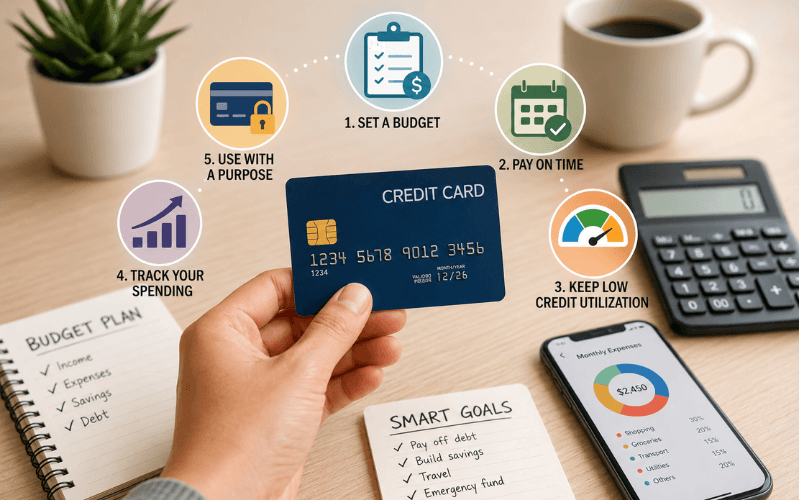
Many people see a credit card as either a convenience or a financial risk. In reality, the way the card is used usually matters more than the limit itself. When managed carefully, a card can help organize expenses, improve financial flexibility, build a stronger credit score, and even generate rewards from purchases you would already make anyway.
The problem is that many users focus only on spending power and ignore how interest, late payments, and poor financial habits quietly increase costs over time.
Using a card strategically does not mean avoiding it completely. It means understanding how to make purchases without losing control of your budget or creating unnecessary debt.
Below, you will see practical ways to use your credit card more intelligently while taking advantage of rewards, financial tools, and better spending habits.
💳 Understand How Your Rewards System Actually Works
One of the biggest mistakes many people make is choosing a credit card without understanding how the rewards system really works.
Some cards focus on:
- cashback
- travel rewards
- airline miles
- gas purchases
- groceries
- dining
- online shopping
Others may offer rotating categories that change throughout the year.
The ideal option usually depends on how you already spend money every month.
For example:
- someone who travels frequently may benefit more from travel rewards credit cards
- a person focused on everyday purchases may prefer cashback credit cards
- frequent drivers may prioritize fuel related rewards
Many users never fully redeem their rewards because they choose cards that do not match their real spending habits.
That is why understanding the reward structure before using the card heavily can help improve long term financial value.
Another important detail is avoiding purchases just to accumulate points. Spending more than necessary usually cancels the real benefit of the rewards earned.
🎯 Set A Spending Limit Before Using The Card
Having access to a larger credit limit does not mean every purchase fits your financial reality.
One of the smartest habits is defining a personal spending limit that matches your monthly budget.
This helps:
- reduce impulsive purchases
- improve expense organization
- avoid unnecessary balances
- maintain financial control
Some people separate spending into categories such as:
- groceries
- transportation
- subscriptions
- entertainment
- travel
- emergencies
This makes it easier to understand where the money is going every month.
Using banking apps and budgeting tools may also help create alerts and spending notifications.
Many financial apps available in the United States allow users to:
- monitor spending in real time
- categorize purchases
- receive alerts
- track recurring expenses
The goal is not simply spending less. It is spending more consciously.
📱 Monitor Transactions Frequently
Checking your transactions regularly is one of the simplest ways to maintain better financial organization.
Many people only look at their statement at the end of the month, which often makes unnecessary spending harder to identify.
Monitoring purchases weekly may help:
- detect fraud faster
- identify subscriptions you no longer use
- reduce emotional spending
- improve budgeting decisions
- avoid surprises on the statement
Most major banks now offer instant notifications through mobile apps, making transaction monitoring much easier.
This habit also helps people understand spending patterns more clearly.
For example, small recurring charges may quietly increase monthly expenses without being noticed immediately.
Financial awareness usually improves when spending is reviewed consistently.
⚠️ Avoid Carrying Balances Whenever Possible
One of the most expensive credit card habits is carrying balances month after month.
Even cards with excellent rewards may become financially harmful when interest charges start accumulating.
Many users underestimate how APR works over time.
A balance that looks manageable initially may grow significantly when:
- only minimum payments are made
- purchases continue increasing
- interest compounds monthly
In some cases, the interest paid becomes much higher than the rewards earned through cashback or points.
That is why paying the full balance whenever possible is usually one of the healthiest financial strategies.
If existing balances already became difficult to manage, some people compare alternatives such as:
- balance transfer offers
- personal loans
- debt consolidation strategies
Those options may sometimes reduce total interest costs depending on the situation.
✈️ Use The Right Credit Card For The Right Purchases
Different cards are designed for different spending behaviors.
Using the wrong card for certain purchases may reduce the rewards potential significantly.
For example:
- travel focused cards may work better for flights and hotels
- cashback cards may fit everyday purchases
- business cards may help organize company expenses
- gas rewards cards may benefit frequent drivers
Some users also separate cards by purpose to improve budgeting visibility.
For instance:
- one card for subscriptions
- another for groceries
- another for travel expenses
This type of organization may simplify expense tracking and help maintain spending discipline.
The goal is not having multiple cards unnecessarily, but understanding which structure works better for your financial routine.
📈 How Smart Credit Card Usage Can Help Your Credit Score
Responsible credit card usage may help strengthen your financial profile over time.
Several factors influence your credit score, including:
- payment history
- credit utilization
- account age
- consistency
- total debt levels
One of the most important habits is making payments on time consistently.
Another important factor is credit utilization, which refers to how much of your available limit is being used.
For example:
- using a very high percentage of the limit regularly may negatively affect the score
- lower utilization levels are often viewed more positively
Maintaining older accounts responsibly may also contribute to long term financial stability.
Improving a credit score may eventually help people access:
- lower interest rates
- better loan conditions
- stronger credit card offers
- financing opportunities
Good financial habits usually create benefits beyond the rewards themselves.
🚫 Common Credit Card Mistakes To Avoid
Some financial habits may quietly create long term problems even when they appear harmless initially.
Paying late
Late payments may generate:
- interest
- penalties
- negative credit impact
Automatic payments or reminders may help reduce this risk.
Maxing out the credit limit
Using almost the entire available limit regularly may affect financial flexibility and potentially impact the credit score.
Ignoring APR
Many users focus only on rewards and forget to compare interest rates carefully.
Opening too many cards quickly
Applying for multiple cards in a short period may create unnecessary financial pressure.
Chasing rewards irresponsibly
Rewards only become valuable when spending remains controlled.
Buying unnecessary items simply to accumulate points often creates more financial harm than benefit.
✅ Smart Credit Card Habits Start With Better Financial Organization
Using a credit card intelligently is less about the card itself and more about the financial habits behind it.
Rewards, cashback, and travel points may create real advantages when spending remains organized and intentional.
Before choosing how to use your card, focus on:
- spending control
- payment consistency
- interest awareness
- realistic budgeting
- financial organization
Over time, those habits may help improve both financial flexibility and long term stability.
If you want to compare popular cashback and rewards options available in the United States, you can also explore the official comparison tools from NerdWallet Credit Cards Comparison to better understand how different reward structures work depending on your spending profile.